In 2017, I published a paper entitled Three Connections between Rising Economic Inequality and the Rise of Populism. This has been my most cited academic article and it is an appropriate topic to revisit on the 25th anniversary of TASC, which has long argued that economic inequality is undermining social cohesion and democracy.
Political science is divided on the link between economic inequality and populism. Simple measurements of economic inequality, such as the Gini coefficient of income distribution, do not correlate with electoral success for populist parties in a straightforward way. Also, there is a range of clearly non-economic factors, such as nationalism and xenophobia as explanatory variables for the rise of populism. My argument is not that economic inequality is the sole cause of populism’s rise, but that several aspects of economic inequality are likely to have causal influence and should be considered as part of any more complete model or explanation of the rise of populism. There are three distinct mechanisms, each of which is a relevant factor in explaining the link between inequality and populism.
TASC has demonstrated the rise of economic inequality countless times, so that will be taken as read. The three links between economic inequality and populism are as follows:
- Economic shocks are more likely due to inequality, and this creates windows of opportunity for populist politics.
- Extreme economic inequality provides empirical evidence supporting the core populist accusation that a self-serving elite is opposed to the needs of the people.
- The changing nature of modern economies has reduced many people’s net economic benefit in ways that are not well measured by conventional indicators like the Gini coefficient. This means that economic systems are serving fewer people, fuelling political appetite for major political change.
1. Economic Shocks and Populism
Economic inequality, especially the concentration of income and wealth, makes economic crises more likely to occur (Kumhof et al., 2015). These crises act as shock events with significant a knock-on effect on political systems. For example, the crisis of 2008 was, at least in part, the result of underlying economic inequality(e.g. Stockhammer, 2015).
It is a classic theory of political science that argues that any crisis (economic or otherwise) can result in many voters breaking their habits and changing how they vote (Lipset and Rokkan, 1967). For this to occur, there not only needs to be a sufficiently important crisis, but political parties need to mobilise along societal cleavages and make these salient to voters. When these two perspectives are combined, the economic and fiscal crisis of 2008 can be seen as both something caused by economic inequality and as presenting an opportunity for a break with pre-2008 voting behaviour.
In 15 out of 27 European countries examined in my original paper, there was a clear rise in the electoral success of populist parties after 2008. It is not a clear-cut picture, as some countries saw a decline in populist electoral successes. However, the point is not that economic inequality is the only cause, but a relevant causal factor. The fact that many populist parties (farleft and far right) mobilise around economic issues like housing, employment, wages and the cost of living is further evidence that economic inequality is relevant to their growth in electoral appeal.
A similar pattern of shock followed by changed voting behaviour can be perceived for the COVID-19 pandemic followed by the inflation crisis across Europe, which has seen populist parties continue to grow their vote share in many countries. However, this is once again not a simple or universal trend. The point is that many countries saw significant shifts in voting behaviour post-crisis, which in some cases saw centrist parties regain vote share. But in most cases there was a clear pattern of crisis followed by voter volatility, which was the opportunity for populists (and others) to mobilise support for their agenda.
2. Extreme Economic Inequality
The rise of the billionaires—and potentially the world’s first trillionaire—contrasts starkly against a situation where many working households cannot afford home ownership or childcare, even when they have incomes from two full-time graduate-level jobs.
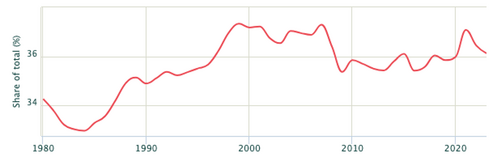
A fundamental credo of populism is that the people at large are in an antagonistic relationship with “the corrupt elite” who benefit from the status quo (Mudde, 2004). This is a concern for far right as well as left populists. However, the data on this is mixed. On a worldwide scale, the top 1% saw a significant rise in their share of income and wealth since 1980, but this stalled post-2008 (figures 1 and 2). The bottom 50% have also seen a rise in their income and wealth share during this period.
Figure 1. Top 1% Income Share (WID.world)
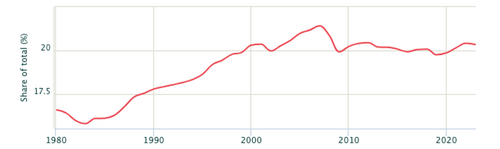
Figure 2. Top 1% Wealth Share (WID.world)
However, billionaires added US$2.2 trillion to their wealth in 2025 and certain billionaires have become politically and socially prominent, which reinforces the perception of an elite with extreme levels of wealth. The influence of ‘tech billionaires’ in the election of US President Trump and their visible presence at his inauguration is one example of this, as is Trump’s own wealth. To the extent that people perceive the existence of an economic super-elite, the fundamental credo of populism is reinforced, which helps explain their recent political successes.
3. Reduced Net Economic Benefit
In Cherishing All Equally, TASC’s first report on economic inequality, we described inequality of “net economic benefits”. Our contention was that some forms of economic inequality are not captured by standard statistics such as the Gini coefficient or percentage income shares. For example, the additional costs incurred by people with disabilities reduces their effective incomes relative to those who do not incur those costs. Also, and crucially for countries like Ireland, when major household costs such as housing grow increasingly higher, the relative and proportionate value of incomes declines in a real sense, even if the Gini coefficient of income shares remains broadly the same.
Figure 3. Residential Property Price Index (CSO)
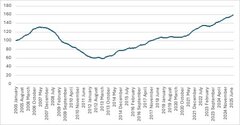
Figure 3 shows the rising cost of housing. While this does not apply to existing home owners, it is a proxy for rising purchase and rental costs for many households, who are likely to find that this overshadows any gain in their household income. In my Three Connections paper, I describe this perception of lower net economic benefits in terms of “insufficiency of resources to attain a minimum, socially acceptable standard of living; insecurity of employment, home ownership or tenure, health care and retirement; isolation in an economy that is increasingly individualised and lacking in collective solidarity; immobility to pursue opportunities among those with disabilities, care responsibilities, negative equity or other reasons why ‘labour mobility’ is not an option; and indebtedness eroding people’s net incomes for other purposes, not least debt associated with housing.”
All five experiences (insufficiency, insecurity, isolation, immobility and indebtedness) can occur even if the Gini coefficient measure of inequality is static or reduces. And all five are plausible reasons why voters may support populists who promise to improve the economic situation. Two examples illustrate this: the National Front (now National Rally) in France has had great success in France’s north-eastern ‘rust belt’. President Trump also achieved a significant vote share among voters who did not feel tangible benefits from the GDP growth figures that Democrats were citing.
Conclusion
None of the three connections are a simple explanation for how economic inequality influences the rise of populism, but all three are theoretically plausible with some empirical data to support their relevance. What I argue is that any explanation of the rise of populism should involve all of the relevant factors in any complete model or explanation for populism. Some of those factors may be non-economic, such as nostalgia or xenophobia, but the three economic factors of economic shocks, extreme inequality and lost net economic benefits should all be taken into account.
Anti-populist politics should focus on policies to reduce the salience of these factors. For example, not enough was done to support poorer households post-2008 or after the recent spike in inflation. Better targeting of support could have reduced the appeal of populism. Likewise, improving public services to reduce the cost of living in a tangible way is a way of countering lost net economic benefits.
References
Kumhof, M., Rancière, R. and Winant, P. (2015). ‘Inequality, leverage and crisis’, American Economic Review 105 (3), 1217–45, available at: http://dx.doi.org/10.1257/aer.20110683
Lipset, S. M. and Rokkan, S. (1967). ‘Cleavage structures, party systems, and voter alignments: an introduction’, in Party systems and voter alignments: cross-national perspectives. New York. 1–64.
Mudde, C. (2004). ‘The populist zeitgeist’, Government and Opposition 39 (4), 541–63.
Stockhammer, E. (2015). Rising inequality as a cause of the present crisis. Cambridge Journal of Economics, 39(3), 935-958. https://doi.org/10.1093/cje/bet052
Dr Nat O'Connor @natpolicy

Dr Nat O’Connor is Assistant Professor of Social Policy at UCD, a fellow of the UCD Geary Institute for Public Policy and former Director of TASC. Nat also previously worked at Age Action, the Labour Party, Ulster University and the Homeless Agency. You can find him on LinkedIn (natoconnor) and TwitterX @natpolicy.
Share:


