Civility, Polarisation, and the Future of Public Debate in Ireland
Takeaways from TASC event on 25th March 2026
Freedom of speech and the tone of political discourse, along with the decline of civil debate, have become salient features of politics in liberal democracies. This decline parallels increasing distrust in political systems and actors, as well as growing economic inequality.
TASC identified these trends even in its 2005 Democracy Commission, when participants expressed a disenchantment with politics and a perception that their voice did not matter enough in policymaking. However, the polarisation in political debate is arguably far worse than it was 20 years ago, and the deterioration of public trust in civic life, especially among young people, is more evident.
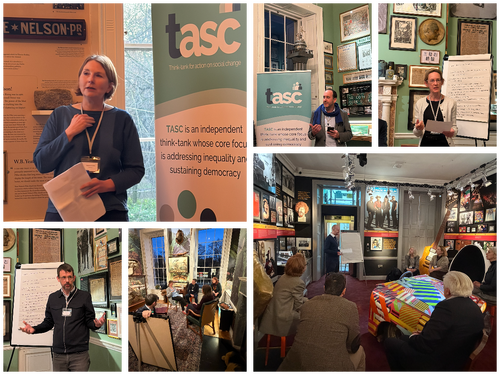
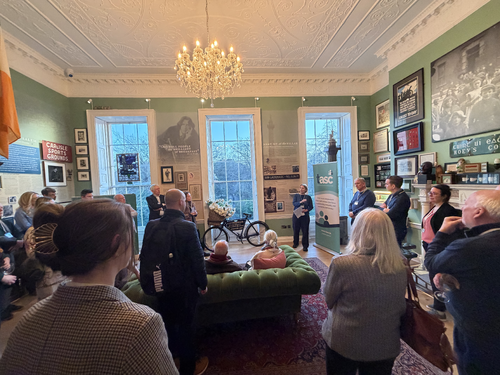
Over 40 participants from across civil society, academia, media, and public life joined us to reflect on, and more importantly to stimulate discussion about, the meaning, causes, and consequences of declining civility in public discourse, as well as to explore practical ways to rebuild trust, inclusion, and constructive engagement in Ireland’s public sphere.
Below is a summary of the discussion, along with the results of the survey that was shared with participants before the event.
We would like to thank all participants for contributing to this important discussion, as well as Mr Trevor White and the staff at the Little Museum of Dublin for their warm hospitality and their support in making this event possible.
Understanding civility in the public debate
The concept of civility is widely understood by the participants as respectful, inclusive, and constructive engagement across difference, grounded in listening and reason, but also bounded by clear limits on harmful behaviour. More specifically, the main themes that emerged from the pre-survey responses were:
- Strong consensus around respect as the foundation. Civility is anchored in respect – for others’ opinions, differences, and basic human dignity.
- Civility as an active process involving dialogue, and engagement, rather than simply being polite. Civility is framed as something practiced, involving effort, attentiveness, and a willingness to engage with opposing views.
- Openness to difference is essential. Civility does not mean avoiding conflict, but rather the ability to engage and tolerate disagreement constructively.
- There is a tension between freedom of expression and limits on harmful speech. There should nevertheless be limits to maintain acceptable debate, such as rejecting abuse, name-calling, and dehumanising language.
- Good faith is important, but not necessarily present in real-world public debate.
- Civility is not just a moral value, but can improve the quality and effectiveness of debate. Civility is associated with evidence-based reasoning, fairness, and more productive outcomes, such as finding common ground or solutions.
Drivers of polarisation and incivility in Ireland today
Both the survey and the event discussion pointed to a strong level of agreement that polarisation and incivility in Ireland are driven by a combination of deeper structural and societal factors:
- Economic pressure and inequality were the main drivers mentioned. The housing crisis, cost of living, and a broader sense that communities are being left behind, create frustration and, in many cases, anger, which can spill over into public debate.
- Social media and the wider information environment. Online platforms amplify extreme views, reward outrage, and spread misinformation. Rather than creating shared understanding, these spaces often deepen divisions and fragment public discourse.
- Decline in trust in institutions, including government, media, and political systems. There is a sense that decision-making is distant, communication is inauthentic, and public concerns are not being adequately addressed. The lack of agency, particularly among marginalised groups, is a key driver of distrust and disengagement, which weakens the foundations needed for respectful disagreement.
- Additional drivers are global influences, particularly from US and UK political culture, as well as rapid social change and rising stress levels in everyday life.
What can improve public debate in Ireland?
- Trust in democracy depends on people feeling heard and able to influence decisions. There is a close connection between polarisation and wider social and economic realities. Issues such as inequality, housing, and exclusion shape how people experience democracy and whether they feel heard within it.
- Media can help reduce polarisation by promoting nuance and critical thinking. While current dynamics can amplify division, media can support a healthier public sphere through stronger resourcing, improved media and AI literacy, and formats that prioritise nuance over conflict.
- It is essential to create safe, inclusive spaces for dialogue, particularly at community level. These spaces enable open, respectful engagement and help ensure that a wider range of voices can participate in public debate.
- Young people’s participation should be actively supported, with an emphasis on valuing their perspectives and creating opportunities for genuine influence. The same should applied to older populations, and marginalised groups. Public participation processes need to be meaningful and lead to visible outcomes, rather than contributing to consultation fatigue.
- Responsibility for healthier public discourse is shared across society. Media, political actors, civil society, and citizens – all have a role to play in fostering respectful engagement and rebuilding trust. Civil discourse should still allow for robust disagreement and meaningful exchange of ideas.
To conclude, incivility and polarisation in Ireland are driven by a mix of inequality, a highly charged online environment, and declining trust in institutions. Addressing these issues requires more than improving the tone of debate. It involves tackling inequality, rebuilding trust, and creating better opportunities for meaningful public participation, including young and older people, as well as other marginalised groups. Civility remains important for healthy debate, but it depends on these broader efforts to be effective.